
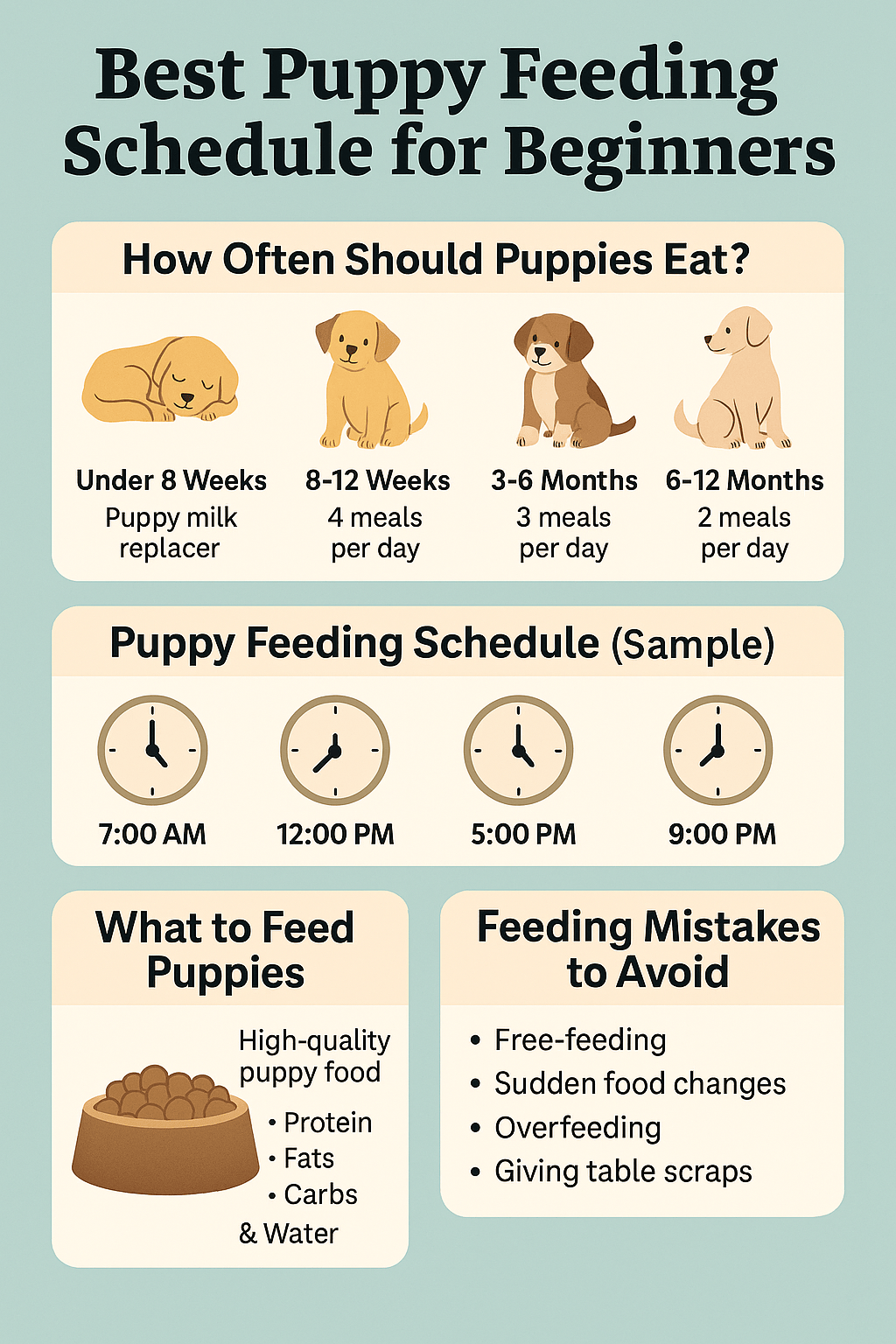
Best puppy feeding schedule for beginners—learn how often to feed puppies by age, what to feed them, and the most common feeding mistakes to avoid. 🐶🍲
Why a Puppy Feeding Schedule Matters
Puppies grow rapidly, and proper nutrition is critical for their development. Unlike adult dogs, puppies need more frequent meals to support their energy levels, bone growth, and brain development.
Without a structured puppy feeding schedule, they may overeat, undereat, or develop digestive issues. By sticking to a routine, you’ll promote healthy habits, make house training easier, and help your puppy grow into a strong, happy adult dog.
👉 Click to view: “How to Potty Train Your Puppy in 3 Weeks”
How Often Should Puppies Eat?
The number of daily meals depends on your puppy’s age and breed size.
- 🍼 Puppies Under 8 Weeks: Puppies this young should still be with their mother and nursing. If orphaned, they require special puppy milk replacer every few hours.
- 🐶 8–12 Weeks Old: Feed 4 meals per day. Puppies at this stage have small stomachs but high energy needs.
- 🐶 3–6 Months Old: Feed 3 meals per day. Their digestive systems are maturing, and they can handle slightly larger portions.
- 🐕 6–12 Months Old: Feed 2 meals per day. Larger breeds may need longer on 3 meals, while small breeds can transition earlier.
- 🐕🦺 12+ Months (Adult Dogs): Most dogs thrive on 2 meals per day. Always adjust based on activity level and veterinary advice.
Best Puppy Feeding Schedule (Sample Routine)
Here’s a beginner-friendly puppy feeding schedule for an average 3-month-old pup:
- 7:00 AM – Breakfast
- 12:00 PM – Lunch
- 5:00 PM – Dinner
- 9:00 PM – Final small meal (optional for very young pups)
👉 Click to view: “10 Eco-Friendly Dog Grooming Hacks”
How Much Should Puppies Eat?
The right amount depends on age, weight, breed, and activity level. Always check your food’s packaging for recommended portions.
- Small breeds: ¼ to ½ cup of puppy food per meal
- Medium breeds: ½ to 1 cup per meal
- Large breeds: 1 to 2 cups per meal
What to Feed Puppies (Nutritional Needs)
- High-quality protein (chicken, turkey, fish, beef) for muscle growth
- Fats (omega-3 & omega-6) for brain and skin health
- Carbohydrates for energy
- Vitamins & minerals (calcium, phosphorus) for bone development
- Water—fresh, clean water at all times
Choose a commercial puppy food labeled “complete and balanced.” Avoid adult dog food until they reach maturity.
Tips for Feeding Puppies Successfully
- Stick to the same brand of puppy food (sudden changes cause tummy upset).
- Transition slowly if switching foods (over 5–7 days).
- Avoid human foods like chocolate, onions, grapes, and avocado (toxic to dogs).
- Monitor body condition—ribs should be felt but not seen.
- Use mealtime for training—feeding part of their kibble as rewards builds good habits.
Common Puppy Feeding Mistakes to Avoid
- ❌ Free-feeding (leaving food out all day) — can cause overeating.
- ❌ Switching foods too quickly — leads to diarrhea.
- ❌ Overfeeding — obesity is a major health risk.
- ❌ Giving only treats — creates nutritional imbalances.
FAQs About Puppy Feeding Schedules
- Q1. How many times a day should I feed my puppy? 8–12 weeks: 4 meals daily. 3–6 months: 3 meals. 6–12 months: 2 meals.
- Q2. Should I feed my puppy on a strict schedule? Yes—structured feeding times help digestion and potty training.
- Q3. Can I give my puppy human food? Avoid it. Many human foods are unsafe for puppies. Stick to vet-approved puppy diets.
- Q4. How do I know if I’m feeding enough? Check your puppy’s body condition—healthy pups have a visible waist and you should feel ribs without seeing them prominently.
- Q5. When should I switch my puppy to adult food? Small breeds: around 9–12 months. Large breeds: 12–18 months. Always consult your vet.
Conclusion: Feeding Puppies the Right Way
The best puppy feeding schedule balances nutrition, routine, and portion control. Feed your puppy small, frequent meals during early months, gradually reducing to two meals as they grow.
By sticking to a structured feeding routine, you’ll support healthy growth, aid potty training, and set the foundation for a long, happy life.
👉 Next, check out Click to view: “How to Potty Train Your Puppy in 3 Weeks” for a complete puppy care guide.